Training Tip: Training and Handling Deaf Horses
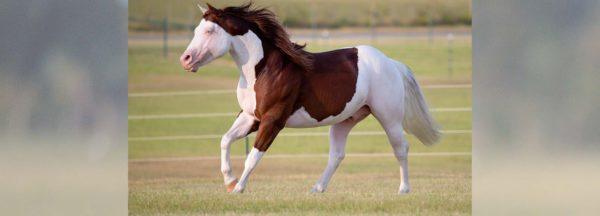
It always surprises me how many people think deaf horses are useless and untrainable to the point of thinking a deaf horse should be put down, or, at the very least, shouldn’t be ridden. It’s ridiculous. I know plenty of deaf horses that are athletic, have great minds and are great partners. A few years ago, I bred and raised a stud named Titan who was completely deaf and went on to earn over $80,000 in the National Reining Horse Association. Guess how I trained him? The same way I did every other horse.
Something that might shock a lot of people to know is that Mindy went deaf in her later years. She wasn’t always deaf, of course, but at some point during her career she became deaf. We discovered it when we were teaching her tricks. When we’d give her verbal cues, Mindy never seemed to catch on. Professional Clinician Shana Terry was working with Mindy as well, and she came to me one day and said, “I think Mindy is deaf.”
My immediate response was, “No she’s not. Why do you think that?”
“Because every time I give her a verbal cue, she doesn’t respond at all. She never seems to catch on to it, no matter how many times I repeat it,” Shana said. “As soon as I do a physical cue, she gets it immediately.”
So I took Mindy to the vet and they ran some exams, and sure enough, she was deaf. That was back when she was on tour and I was riding her in front of thousands of people. I didn’t even realize it because she responded to me as she always had. She didn’t miss a step during our groundwork performances, and under saddle she responded the same. I’d say, “Whoa,” and she’d stop. I’d cluck, and she’d speed up. That’s because when you do a verbal cue, whether you realize it or not, your body position changes slightly. When you say, “Whoa,” you sit down in the saddle a bit deeper. When you cluck, to ask the horse to speed up, you lean forward slightly. Horses tune in to everything you’re doing, no matter how minuscule it is.
I think horses that can’t hear are more tuned in to your body language, which makes it even easier to train them under saddle. It’s almost like they’re hypersensitive to learning what your body cues are. Titan was the first deaf horse I trained as a performance horse, and he was very easy. In fact, under saddle I changed nothing with my training because of his deafness.
The only change I made in the way I interacted with him compared to horses that can hear is when I approached his stall. If he was sleeping and turned away from me, I’d pick up some shavings and toss them at his hindquarters. He’d wake up and turn around, and I’d walk into the stall. Normally, when you approach your horses’ stall, they either hear you approaching or hear you unlatching the gate and it gets their attention. With Titan, if he had his head stuck in the corner of his stall, he had no idea that I was in the stall with him until I touched him. It wasn’t fair to surprise him that way—it’d be like if I snuck up on you while you were sleeping and scared you—so I’d give him a little warning that I was coming into the stall with him.
What I think is hilarious is that people think that a horse being deaf makes them some sort of leper or untrainable. I know a lot of horses that can hear who are bad-minded, have no talent and have terrible conformation. If deaf horses are that bad and Titan is a representative of them, please, I want 20 more of him, all deaf as a post.
Have a horsemanship question or looking for more training tips? Check out the No Worries Club.
