Training Tip: End Training Sessions on a Positive Note
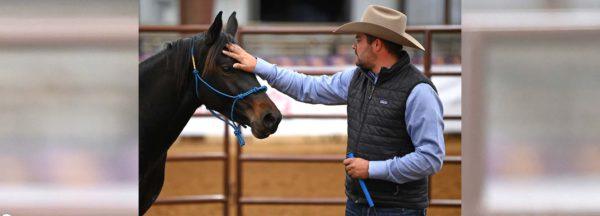
When I give my horses treats, I typically give them at the end of a training session when I’m putting the horses away for the day. That way, the last thing they remember is me scratching on them and giving them a treat.
Spending a couple of minutes rubbing and scratching your horse is especially important to do with foals. I always tell Academy students that the first five minutes of working with a horse that’s a yearling or younger and the last five minutes when you take the halter off should be spent scratching the horse. You want your young horse to think you’re the greatest scratching post in the world. When you do that, you’ll never have trouble catching them.
However, if you put the halter on them and immediately put them to work and then at the end of the training session take the halter off and immediately leave, after a few days, they think you’re no fun to be around.
I use this analogy to explain it. Let’s say that we work in an office and I’m your boss. Every time I meet you in the morning, I get you up from your desk and make you dig a hole. After a day or two of me making you dig a hole, you hope I don’t come into your office. It doesn’t take long before you start walking the other way and avoiding me when you see me coming toward you. Let’s say that on the fifth day, instead of making you dig a hole, I walk into your office and hand you $100. I repeat that for three days in a row, and then on the fourth morning ask you to dig a hole. Now, when I come to your office, you’re not sure what my motive is but because you like receiving cash you’re going to hang around to find out. Think of scratching your horse like being given $100 in cash. You want your horse to anticipate that reward and balance it with “here’s a shovel, go dig a hole.”
All work and no play makes your horse not want to hang around you. All play and no work makes him want to hang around you but he’ll act belligerent. You have to balance reward with respect.
When it comes right down to it, feeding treats is like anything in life. If you do too much of it, it leads to problems. If you only feed your horse treats and don’t move his feet, he’ll love being around you but will be pushy and dangerous. If you only move his feet and never love on him or give him treats, he won’t want to be around you. You have to find a healthy balance.
Have a horsemanship question or looking for more training tips? Check out the No Worries Club.
