Training Tip: Canter With Confidence: Practice Posting to the Trot
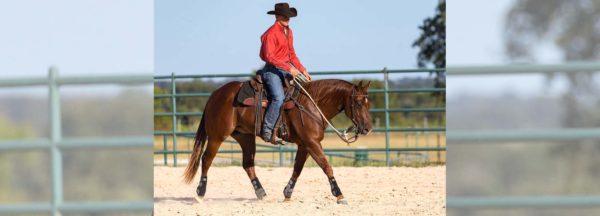
When you’re first learning to ride your horse, it’s normal to be leery of cantering. Gain confidence and master the three-beat gait by setting yourself up for success.
Tip #4: Practice posting to develop a good, independent seat.
Posting trains your body to move in rhythm with the horse. As a general rule, people who post are much better riders than those who don’t ever practice it. Most people make learning how to post way too difficult, but in true Downunder Horsemanship fashion, I keep it idiot-proof. The best way to learn how to post is to start at the standstill. Start by standing up in the stirrups and act like you’re going to head butt the ceiling. Then sit down. Repeat that, “stand up, sit down, stand up, sit down,” until you feel comfortable with the motion. With the horse standing still, you don’t have to worry about keeping your balance as he’s moving; just focus on standing up and sitting down.
When you’re comfortable at the standstill, practice the same thing while the horse walks on a loose rein. Practicing at the walk first will build your confidence before going straight to the trot. When you’re ready, ask the horse to trot and then let his motion push your body up and then sit down. As you go up, say, “Up!” And when you sit down, say, “Down!” Talking out loud will help your body get into rhythm with your horse.
Don’t try to steer your horse while working on your posting. Let him go wherever he wants to go in the arena and focus on getting in rhythm with his gait. You’ll know when you’re in rhythm with your horse because it’ll suddenly become much easier. Post as much as you can for two or three weeks solid—or until moving in rhythm with your horse becomes automatic.
Read the previous tips in this series: Tip #1: Use Correctly Fitted Tack, Tip #2: Sit in the Saddle Correctly, and Tip #3: Practice With the Right Horse.
