Training Guide: Blanketing Made Easy
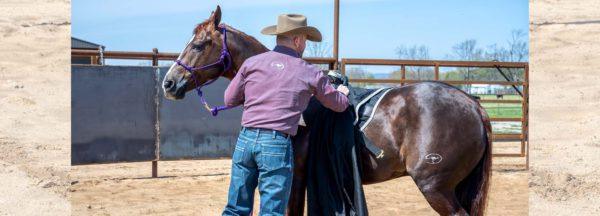
Are you blanketing your horse this winter but having a hard time actually getting the blanket on said horse? You’re not alone. Blanketing a horse can be a struggle because blankets are objects that move and make a noise, which makes them particularly scary to horses.
“A horse classifies any object he’s not familiar with, especially if it moves and makes a noise, as dangerous and potentially life-threatening. A horse would always rather run away from anything that frightens him instead of hanging around and fighting it,” Clinton explains. “If he can’t run away from danger, the only way he can survive is to fight. He’ll kick, bite, strike or do whatever he can to get away from the danger, but his first form of defense is to run.”
Whenever you desensitize your horse to an object, you’ll always use the Approach and Retreat Method. “You build the horse’s confidence by approaching him with the object that scares him (in this case the blanket) and then retreating (taking the blanket away) when he stands still and relaxes,” Clinton says.
In the training guide, “Blanketing Made Easy,” Clinton explains how to introduce a blanket to your horse and build his confidence about wearing it. Read the article on the Downunder Horsemanship website.
