Essential Tools to Communicate Effectively
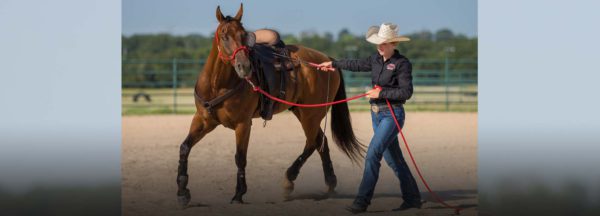
To be an effective leader for your horse, you have to be able to communicate with him clearly. Horses communicate almost exclusively by using and reading body language. “Sure they whinny and nicker to each other, but it’s not really to tell each other what to do. They usually use vocal cues to make it known where they are located or to find out where other horses are. If one horse wants another horse to move, what does he do? He pins his ears, lowers his head and neck and acts more assertive. Horses have a systematic step-by-step approach they use to make each other move. Think of the broodmare in the pasture, if she wants another horse to move, she approaches him with a plan and gradually increases the pressure until he moves out of her space. She doesn’t immediately go up to the other horse and start kicking the snot out of him. She gradually increases the pressure until it is impossible for him to ignore her,” Clinton says.
What does that have to do with training horses? “Simple, if you want to be an effective horse trainer, you need to tune in to body language and be aware of both yours and your horse’s. If you want to be a great horseman, you not only need to be aware of body language, but you have to understand and be able to use it effectively. There’s no way around that. A great horseman can communicate with his horse through almost invisible commands. The horse reads his body language and effortlessly moves with him,” Clinton says.
To help horsemen learn how to communicate with their horses and use their body language effectively, Clinton recommends using the Handy Stick and String when doing groundwork exercises. The 4-foot long stick and the 6-foot long string attached to it act as an extension of the horseman’s arm, making it possible to cue the horse from a distance while doing groundwork exercises. The stick and string are used for desensitizing exercises – teaching the horse to stand still and relax to pressure – and sensitizing exercises – teaching the horse to move his feet to pressure.
Learn more about the Handy Stick and String on our website.
